Home Guides and Articles
Direct Vent Fireplaces Buyer's Guide

Direct Vent Fireplaces Buyer's Guide

Direct vent gas fireplaces have excellent efficiency ratings and are so adaptable. They are suitable for almost all spaces, including bedrooms and bathrooms.

Their versatile venting system is a key feature that makes them a highly efficient solution for your home and replacement for your traditional fireplace. You can vent them vertically, horizontally, or by using a combination of both. These units have a sealed glass front that improves efficiency and prevents air loss from the room. Did we mention that they're low maintenance as well?
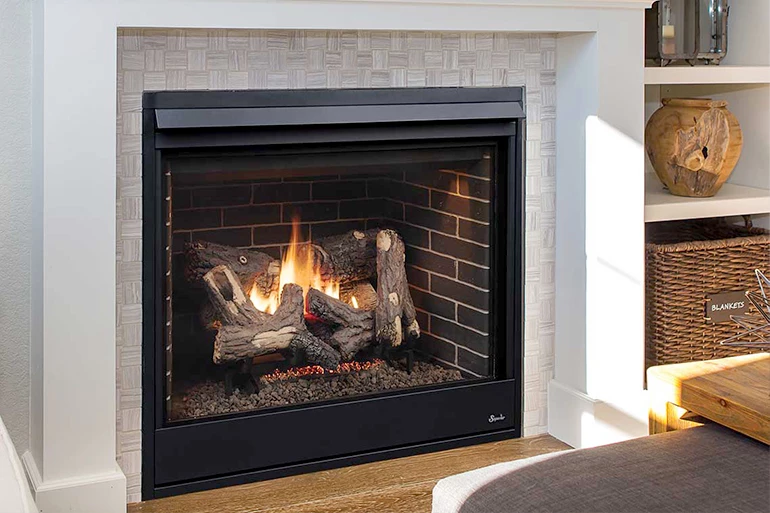
Direct Vent Fireplaces

We'll walk you through how these models work compared to other gas fireplaces. We'll outline what to expect for installation and cover heat ratings and things like maintenance and shipping.

About the Author

Collin Champagne

With over 13 years in the industry, Collin is a National Fireplace Institute (NFI) certified technician and managed content for the eFireplacestore and eCanopy brands. He has achieved the highest NFI certification possible as a Master Hearth Professional and is certified in all three hearth appliance fields: wood, gas, and pellet. With experience with sales and in-field installations, his expertise shines through his technical knowledge and way with words.

Customer Q&A with Product Specialists

Eric F. from St. Louis, MO asked:
Hello, do any direct vent fireplace models have a horizontal venting option through an exterior wall that uses two separate 4-inch pipes (one for intake, one for exhaust), potentially exiting through two separate 4-inch holes? My concern is that the typical coaxial pipe systems require a larger opening (around 10x10 inches) which could cause cracking in my old stucco exterior over metal lath. I'm hoping two smaller holes would be less damaging. Thanks, Eric.
Hi Eric, Direct vent fireplaces can indeed use two distinct piping systems: coaxial and colinear. The coaxial pipe features one pipe inside another, while the colinear system consists of two separate pipes for combustion air intake and exhaust. While colinear (two-pipe) systems exist for direct vent fireplaces, they are primarily designed for use with direct vent inserts installed into existing masonry chimneys. For these applications, the individual pipes can be smaller, often 3 or 4 inches in diameter, allowing for smaller, separate openings. For example, we offer a Majestic Direct Vent Wall Pass Through for 3 or 4 Inch Chimney designed for this purpose. However, most direct vent fireplaces installed into a new framed opening in an exterior wall and vented horizontally will utilize a coaxial (pipe-within-a-pipe) system. These systems require a single, larger penetration through the wall. The outer diameter of these coaxial pipes typically ranges from about 6 5/8 inches to 8 inches for the pipe itself, and the termination cap would require a larger opening to account for clearances, often similar to the 10x10 inch size you mentioned. If you're considering a direct vent fireplace, please let us know your preferred style (e.g., traditional logs or contemporary glass media) and the approximate size (width) you are looking for. Also, please specify your fuel type (natural gas or propane) and your shipping zip code so we can provide a personalized quote, including any necessary venting components.
Answered by: Sid G. on Jun 17, 2026

Helpful?

0
Showing 1 of 1 Questions and Answers
Ask a Question
chat-bot-icon